
Your Data Is Untapped
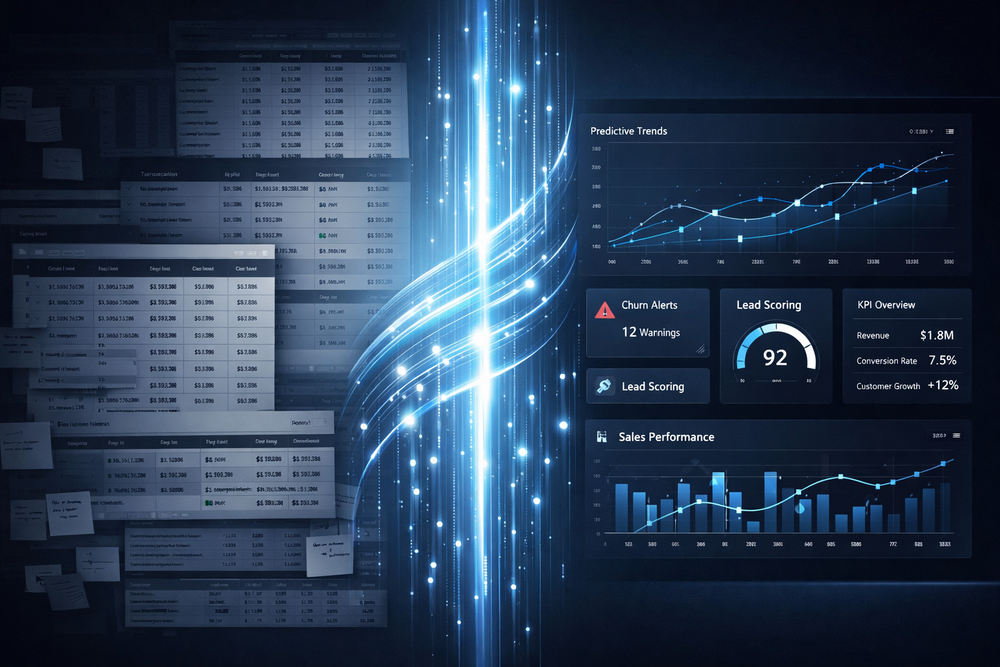
Your Data Is Untapped
The part most businesses underestimate: the data pipeline
This is where many AI initiatives quietly break down.
Businesses often assume the hardest part is building the model. In reality, the bigger challenge is usually the data itself.
If your information is spread across disconnected tools, full of inconsistencies, missing key fields, or updated manually in different formats, the model will struggle to produce reliable results. Even the most sophisticated system will fail if the input data is incomplete or messy.
This is the data pipeline problem — and it is one of the most common reasons AI projects stall.
Before any model can deliver value, your business needs a clear way to collect, clean, structure, and connect the data it already has. Without that foundation, the output becomes difficult to trust.
So where should a business actually start?
This is the question we hear most often.
Not whether AI is powerful. Not whether machine learning matters. But where to begin without building an entire data department first.
The answer is much simpler than most people think: start with an audit.
Before investing in a model, a platform, or a major systems overhaul, you need visibility. What data do you already have? Where does it live? How reliable is it? Which business problem would create the most value if solved first?
Those questions matter more than jumping straight into tools.
And no, this does not need to become a six-month strategy exercise. In many cases, one focused session is enough to identify the clearest opportunities, the biggest data gaps, and the most realistic use cases for immediate ROI.
The businesses that make progress with AI are not always the biggest ones or the ones with the most data.
They are usually the ones that start with a real business problem, get honest about the quality of their data, and take the first practical step.
Because the opportunity is already there.
Most businesses are not sitting on a landfill. They are sitting on untapped value — and the sooner they learn how to use it, the faster they can turn that value into better decisions, better systems, and better growth.